On this page
- Why you need a roofing answering service: calls are hard to catch
- What a missed call costs a roofer
- What a roofing answering service must do
- Insurance questions a roofing answering service should handle
- Voicemail, crew, live operators or AI: how the options compare
- Roofing answering service cost
- Questions to ask a roofing call answering vendor
- How to set up storm call answering before storm season
- Adaptify: AI call answering for roofing contractors
- Common mistakes when you outsource roofing phone answering
- Roofing answering service checklist
- Sources
A roofing answering service answers every call your company gets, including storm surges and late-night leaks. It sends each job to the right person. Without one, a storm rolls through at 6 p.m. Your phone rings 14 times by 7:30, and your crew is on a roof across town. By the time you check your messages, seven of those homeowners have booked someone else.
Roofing has a phone problem that few trades share. Calls arrive in waves, they come from stressed people with water in the house, and the person who normally answers is up a ladder. A roofing answering service is how you stay in the race when the phones light up. This guide compares your options, shows what they cost and gives you a plan for setting one up. Sources are linked at the end.
Why you need a roofing answering service: calls are hard to catch
Three things make roofing different from a trade with a steady stream of calls.
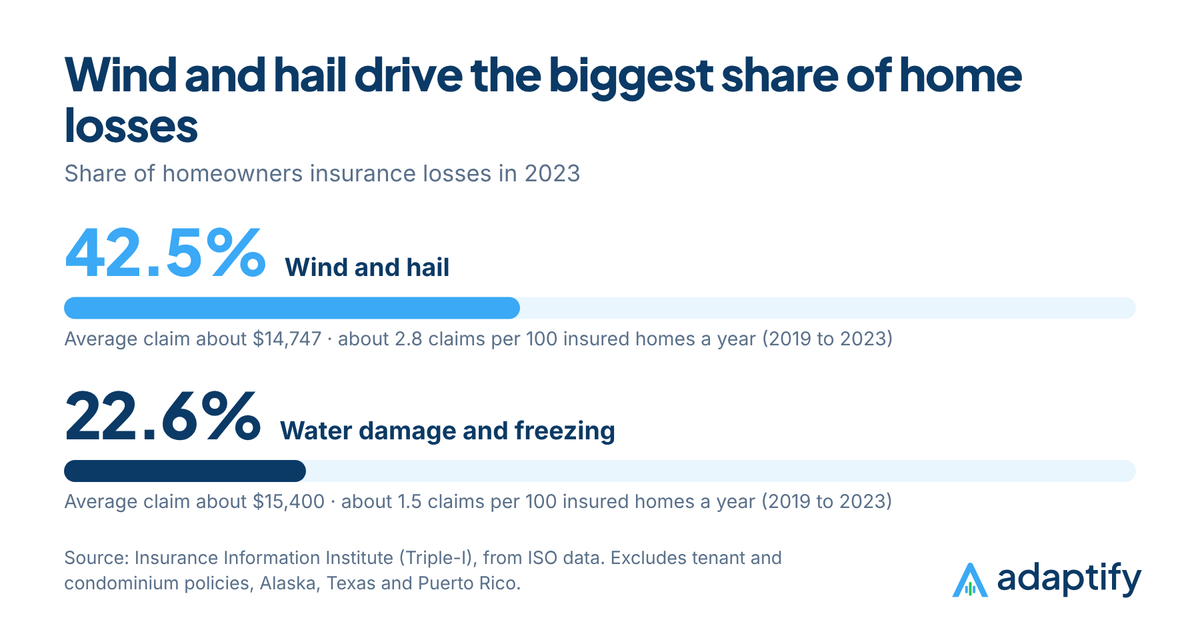
1. Storms create surges. Wind and hail are the biggest source of homeowners insurance losses. Triple-I reports that wind and hail made up 42.5% of homeowners insurance losses in 2023, with an average claim of about $14,747 over 2019 to 2023 and roughly 2.8 claims per 100 insured homes a year. (Triple-I) When a storm hits a town, thousands of homeowners look for a roofer in the same few hours.
2. Your people are not at a desk. A crew on a roof cannot take a call safely, and the owner is often on another job or in the truck.
3. The caller is in a hurry. A leak is urgent even when it is small. Jobber's 2026 survey of 1,050 home service owners found that 28% of customers expect an immediate reply. Another 28% expect one within an hour. Only 20% of pros reply that fast. (Jobber)
What a missed call costs a roofer
Roofing is a high-ticket trade, which makes each lost call more expensive. This Old House reports that full roof replacement averages about $15,439 (2026, as reported by Beside). Even a repair can be meaningful: This Old House puts emergency roof leak repair at $379 to $1,755. It notes that emergency work can cost up to twice as much as regular repair, plus a $100 to $300 fee. (This Old House)
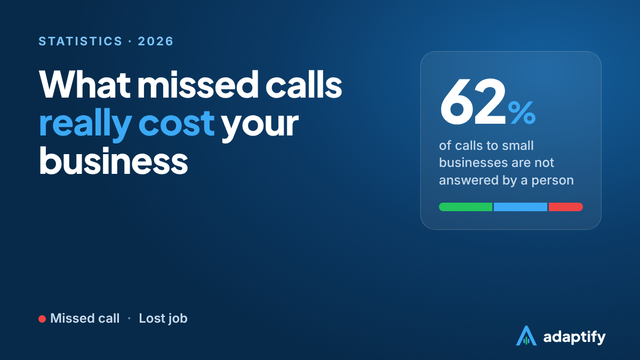
Those jobs often start with a call that goes unanswered. Invoca reports that 27% of calls to home services businesses go unanswered, and that fewer than 3% of callers pushed to voicemail leave a message. (Invoca) In Invoca's 2026 home services benchmark, only 52% of inbound calls reached a person. (Invoca 2026 report)
A simple way to estimate your own exposure: missed calls per week, times the share that would have booked an estimate or repair, times your average job value. Even at a modest booking rate, one roof replacement a month is more than the cost of any answering service in this guide.
What a roofing answering service must do
A leak call is different from a sales inquiry. The caller is stressed, the situation changes by the hour, and the right next step depends on what they say. A roofing-ready service should:
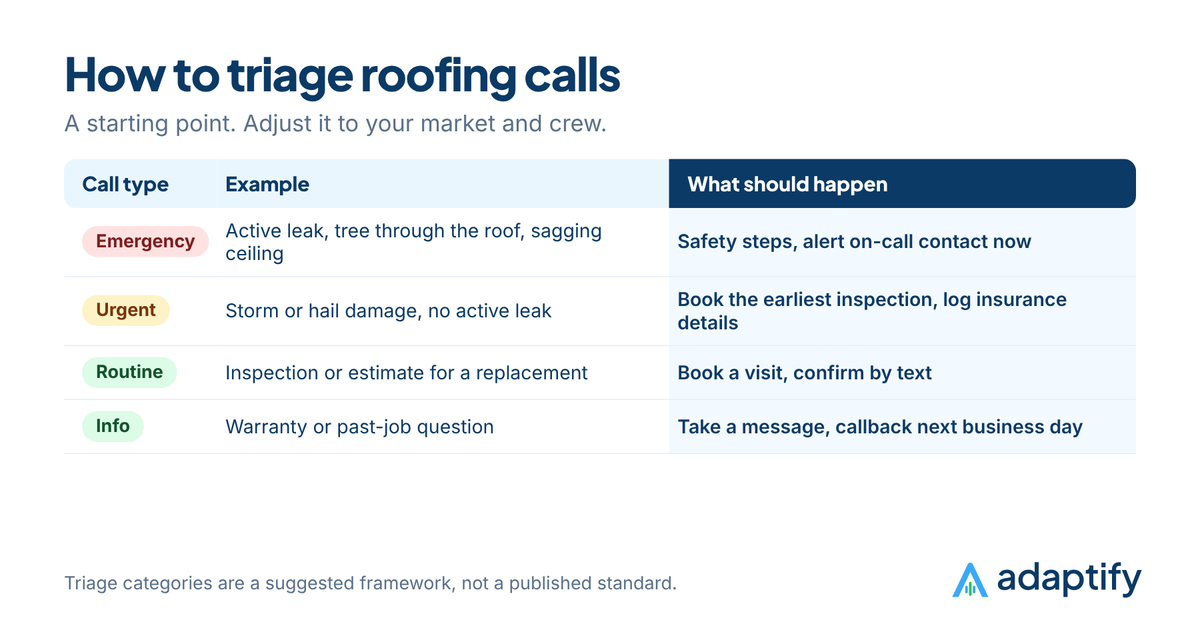
- Sort the call. Active leak, storm damage, an inspection request, an estimate for a replacement and a warranty question are different calls with different urgency.
- Keep the caller safe. If water is near electrical fixtures or the ceiling is sagging, the first message is about safety, not a quote. This Old House advises catching water with buckets and staying off a damaged roof. It says to shut off power if water reaches electrical equipment. After extreme storm damage, leave the home until specialists inspect it. (This Old House)
- Collect the details. Name, phone number, address, where the water enters, whether it is active, storm or tree damage, whether the home is occupied and the insurance carrier.
- Alert your on-call contact. Emergencies reach a human on your team in seconds, with a backup if they do not respond.
- Book the next step. Inspections and estimate requests get a slot, so the caller does not have to call again.
- Log every call. You need the record, especially when insurance is involved.
Insurance questions a roofing answering service should handle
Many roofing calls involve insurance. A good script does not give coverage advice, which belongs to the insurer, but it can set callers on the right path. This Old House notes that homeowners insurance typically covers leak repair when a sudden event, such as a storm, causes the damage. It may not cover damage from age or lack of upkeep. If a homeowner plans to file a claim, it suggests contacting the insurer first. Ask about qualified inspectors and contractors. It also warns that walking on a damaged roof or doing needless DIY work may hurt a claim. (This Old House)
Your service should capture the carrier and any claim number and pass them to you, and leave the coverage questions to the insurer.
Voicemail, crew, live operators or AI: how the options compare
Voicemail
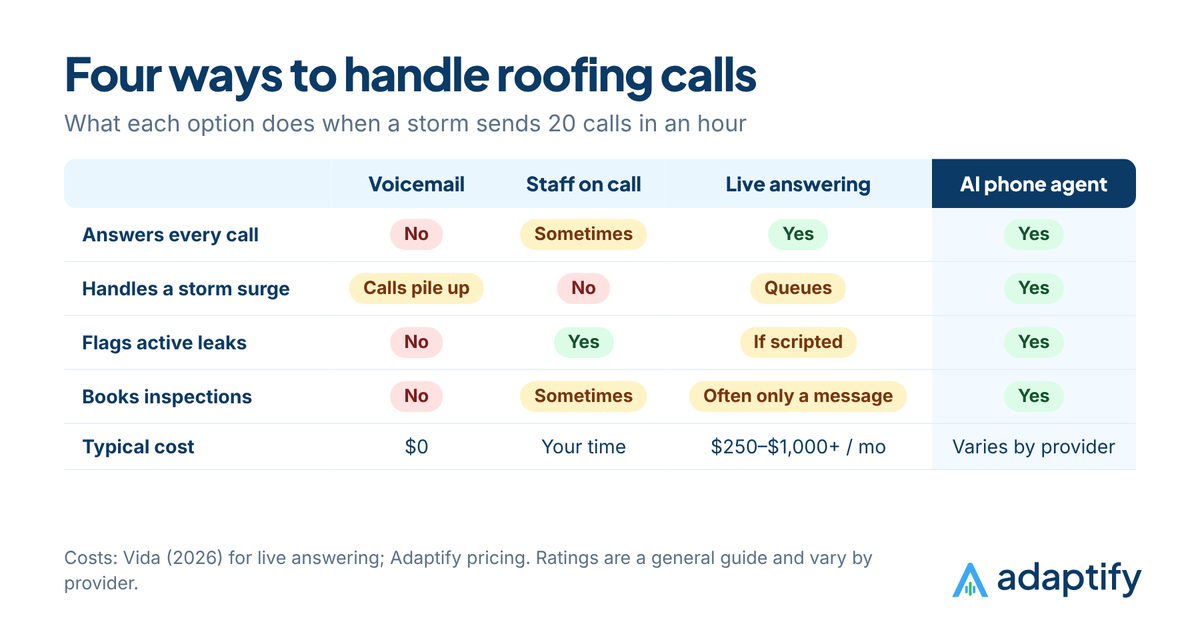
Free, and the weakest option. With fewer than 3% of callers leaving a message, voicemail is a list of leads that went elsewhere.
Staff or the owner on call
Having someone answer gives you control, but roofing makes it difficult. Crews are on rooftops, owners are estimating, and after a storm the same person cannot answer 14 calls in an hour.
A live answering service
A human operator answers, follows your script and passes you a message or transfers the call. Typical pricing from Vida's 2026 guide (a vendor that sells AI, so read with care): $250 to $1,000+ a month, or about $0.65 to $1.75 a minute, or $1.75 to $4.00 per answered call. Extras may include weekend rates 10% to 25% higher, holiday rates 1.5 to 2 times normal, overage fees and script-change fees. The guide estimates hidden charges can add 15% to 25% to advertised prices. (Vida)
Live services work well at steady volume. The weak spot is the storm surge: when everyone in a city calls at once, callers can wait in a queue. The operator may also not know your service area or the right questions for a roof.
An AI phone agent
An AI phone agent answers instantly and can take many calls at once, so there is no queue on the busiest night. It follows your rules, flags emergencies, alerts your on-call contact, books inspections and logs every call. Basic AI answering tools cost about $25 to $200 a month, according to Vida. A done-for-you agent costs more because it is built and managed for your business.
The trade-off is that quality depends on setup. Choose a provider that tests the agent on your real call types. It should hand off to a human when needed and tell callers they are speaking with an AI.
Roofing answering service cost
Here is an illustrative example. A normal month has 60 after-hours calls at about 3 minutes each (180 minutes). A storm month has 200 calls (600 minutes):
- Normal month, 60 calls (180 minutes): $105 to $240
- Storm month, 200 calls (600 minutes): $350 to $800
These figures ignore extra fees and plan minimums. AI phone agent pricing varies by provider, usually a setup fee, a monthly fee and a per-minute rate, so ask for all three. In a quiet month a basic live service can cost less. In a storm month, per-call billing climbs while an AI agent's cost grows slowly, and it keeps answering at any volume. Weigh that against a single replacement job averaging $15,439.
Questions to ask a roofing call answering vendor
- What happens when 20 people call in an hour? Is there a queue?
- Walk me through an active leak call and a hail damage call.
- Who is alerted, how, and what if they do not answer?
- Can you book inspections and estimates, and into which calendar?
- Can you capture insurance carrier and claim details?
- Do I get call summaries or recordings?
- List every fee, including storm-week and weekend charges.
- What is the contract length and cancellation policy?
- How do you tell callers they are speaking with an AI or an outsourced operator?
Ask for a test call and role-play a storm night.
How to set up storm call answering before storm season
- Define your emergencies. Active leak, tree through the roof, a sagging ceiling.
- Choose your on-call contact and a backup with a response-time target.
- Write your safety steps for callers, with your insurer's and local guidance in mind.
- List your intake questions using the list above.
- Set your service area so callers outside it are politely declined.
- Define inspection and estimate windows so the agent can book them.
- Forward your calls when your office is closed or busy, and during storm alerts.
- Test it with real scenarios, including a surge of calls.
- Review weekly during storm season and adjust.
Adaptify: AI call answering for roofing contractors
Adaptify builds, launches and manages an AI receptionist for your roofing company. The agent answers leak and storm damage calls after hours, books inspections and estimate requests, alerts your on-call contact and logs every call. It goes live in 6 days with nothing for you to set up.
Want to see how this would work for your company? Check out the Adaptify roofing page and the pricing page, or request your agent.
It is not right for every roofer. If you get a few after-hours calls a month and need only a message, a basic live service may cost less. If storms bring waves of calls and you want each one answered, sorted and booked, an AI agent is built for that.
Common mistakes when you outsource roofing phone answering
- Waiting for the storm. Set it up before the season so you can test it.
- Skipping the safety message. A caller with a leak needs steps now.
- Giving coverage advice. Leave insurance decisions to insurers.
- Choosing on price alone. The cheapest message service can cost you a $15,000 roof.
- Never testing. Call your number during a mock storm surge.
Roofing answering service checklist
- Count the calls you missed last storm season and what they were worth.
- Decide what must reach a human at once and what can wait for morning.
- Pick the option that fits your call volume, including storm weeks.
- Set up intake questions and insurance details.
- Run a test call before you commit.
Sources
Figures are reported by the organizations named. Some publishers also sell call-answering or call-tracking products, so we label vendor sources.
- Insurance Information Institute (Triple-I), Facts and statistics: homeowners and renters insurance (ISO data; excludes tenant and condominium policies, Alaska, Texas and Puerto Rico)
- This Old House, Emergency roof leak repair
- Beside, Missed calls cost small business (reporting This Old House's 2026 roof replacement average)
- Invoca, How much missed sales calls cost home services businesses (2024)
- Invoca, Home Services Lead Conversion Benchmarks Report 2026 (July 2026)
- Jobber, 2026 Home Service Trends Report (1,050 owners surveyed December 2025)
- Vida, Answering service pricing (February 2026; vendor-published ranges)
Frequently asked questions
What is a roofing answering service?
It answers your calls when your crew is on a roof or the office is closed. It collects the details of the leak or storm damage, flags emergencies, alerts your on-call contact and can book inspections and estimates. It can be a live operator or an AI phone agent.
Why do roofers lose so many calls?
Roofers are on roofs, not at desks. Calls also spike after storms, when every homeowner calls at once. Invoca reports that fewer than 3% of callers sent to voicemail leave a message, so a missed call usually becomes a call to the next roofer.
How much does a roofing answering service cost?
A live operator typically costs $250 to $1,000+ a month, or about $0.65 to $1.75 a minute (Vida, 2026).
What should the person answering ask a caller with a roof leak?
Name, phone number and address, where the water is coming in, whether it is active or stopped, whether there is storm or tree damage, whether anyone is at risk, the insurance carrier if they have one, and whether the home is occupied and accessible.
Can an AI phone agent book roof inspections and estimates?
Yes, if it is set up with your service area, calendar rules and inspection windows. A well-built roofing agent books inspections and estimate requests, flags leak and storm damage calls, and alerts your on-call contact.
What should callers do while they wait for a roofer?
This Old House suggests catching the water with buckets, finding the source from the attic if it is safe, avoiding walking on a damaged roof and calling an emergency roofer if water is pooling. If a homeowner plans to file a claim, they should contact their insurer first.
How fast can I set up call answering for my roofing company?
A live operator service can start in a day or two. Many providers launch a done-for-you agent within about a week.